In today’s market, succeeding in logistics isn’t just about moving freight; it’s about making smarter decisions and empowering your teams to do the same.
AI is already reshaping how logistics teams plan, route, and deliver. But for many companies, the conversation has shifted from boosting performance to cutting labor. That approach is short-sighted and risky. The logistics leaders gaining ground today aren’t replacing their people with technology; they’re using AI to amplify their teams’ capabilities.
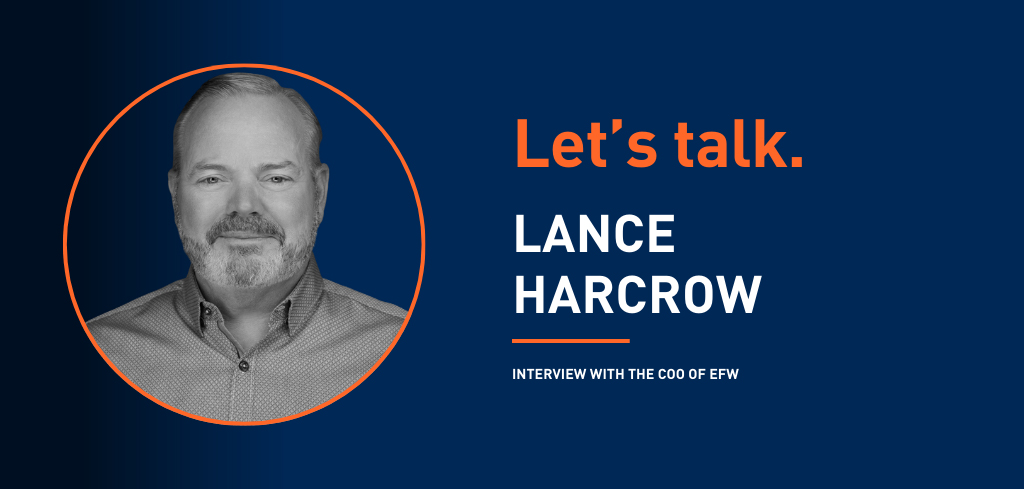
Lance Harcrow, Head of Domestic Operations at EFW, says this shift is long overdue. In this Q&A, he breaks down why the company’s newest facility in Joliet, Illinois, is a blueprint for people-first automation. From real-time SLA prevention to cross-border readiness and workforce retention, Harcrow shares how EFW is using AI to support its teams and what that means for shippers looking for reliable, long-term partners.
What’s EFW’s Guiding Philosophy on Automation Today?
We’ve reached a turning point in logistics. The tools are faster, the data is so much richer, and the automation is more feasible than ever. But there’s one thing I keep telling my team at EFW: The technology doesn’t matter unless it makes our people better. That’s been the mindset as we expand our network, build out new facilities, and bring more AI into our daily operations. Basically, we are automating to support our people, not to replace them.
Our Joliet facility is a good example of that. It was built so that our people could do their jobs better. And so far, it has been a test bed for how we blend AI with people.
How Does the Joliet Facility Reflect EFW’s Future Strategy?
In Joliet, we designed everything to give our teams more room to think. This site connects multiple distribution channels, taps into Canadian corridors, and runs on a new WMS that opens up visibility we never had before. We call it an evolved 3PL strategy. The facility has greater reach, more control, and greater intelligence — without losing the human touch.
Joliet is already changing how we work. Operators have fewer delays, dispatch has fewer surprises, and our service levels improve because we can now catch problems before they happen. That really helps us to identify and prevent those errors before they happen. And we expect SLA performance for the business we handle to improve considerably.
Why Is Automation Suddenly a Bigger Priority in 2026?
2025 felt like a pause year. Many businesses sat back, trying to figure out the next step. But in 2026, the pressure is back on, especially because shippers can’t wait anymore. They need execution. And that urgency brings automation to the front of every conversation. But too many are asking the wrong question: What can we cut? The better question is: What can we improve?
At EFW, we’ve seen what happens when you build automation with people in mind. It unlocks flexibility, speeds up onboarding, and keeps your teams focused on solving real problems, rather than just moving freight. AI can drive up to 30% gains in operational efficiency. But only if it’s aimed at the right thing. Our goal isn’t just fewer steps — it’s better steps, which is how you build momentum.
Can AI Really Preserve the Human Element in Logistics?
Even with all the AI and automation we’ve brought in, we make it very clear that our people matter. We use machines to pull better insights and handle repetitive workflows. But the judgment calls? The customer relationships? How does one approach problem-solving when something goes off script? That’s all human. And that approach to AI has helped us retain our culture as we grow. It’s also helped us bring in the right kind of talent — people who think and move fast and understand that, fundamentally, great logistics is about making the right decisions with the data you have.
How Are You Preparing Your Systems for Cross-Border Growth?
We’re expanding our cross-border network, especially in Mexico, where near-shoring is creating new volume lanes and new security risks. Now, we know that growth won’t be smooth. But the way we prepare for that is simple. Build infrastructure, protect our data, and make sure our people are ready. Everything has to be designed to support higher-volume flows, north and south. And cybersecurity has become a focused effort to protect and ensure continuous data flow for visibility across the supply chain.
But that is not something we can automate away, which is where our people come in. When they’re supported by AI and are not buried under broken systems or stuck chasing missing data, they can move faster, act smarter, and serve our customers better.
What’s The One Thing You Want Logistics Leaders to Remember?
I’ve been in this business long enough to appreciate its evolution over the years. What I’ve learned is this: The ones who win in the long term respect the people doing the work. Tech will keep advancing, but people will be at the center of operations.
It is easy to be caught up in the tech craze, but tools are just that — tools. Top management must always remember the “why” of tech use and avoid using tech to supplant people. For example, ask these questions:
- Are we using it to cut headcount? Or to reduce delays?
- Are we trying to eliminate workers? Or remove roadblocks?
At EFW, we’re choosing the second option every time. That’s how we’re building something sustainable, while preparing for the future. When you build automation that works with your people, rather than against them, you protect your operations and purpose.