When transporting fragile medical equipment, missteps lead to damage, delays, or equipment that can’t be used when it’s needed most. For manufacturers, this risk shows up as warranty claims, replacement costs, missed installation windows, and frustrated hospitals. Shipping medical devices means engineering a controlled, end‑to‑end logistics process.
Below is what that journey looks like and where the biggest challenges and risks arise.
Engineering the Right Packaging From Day One
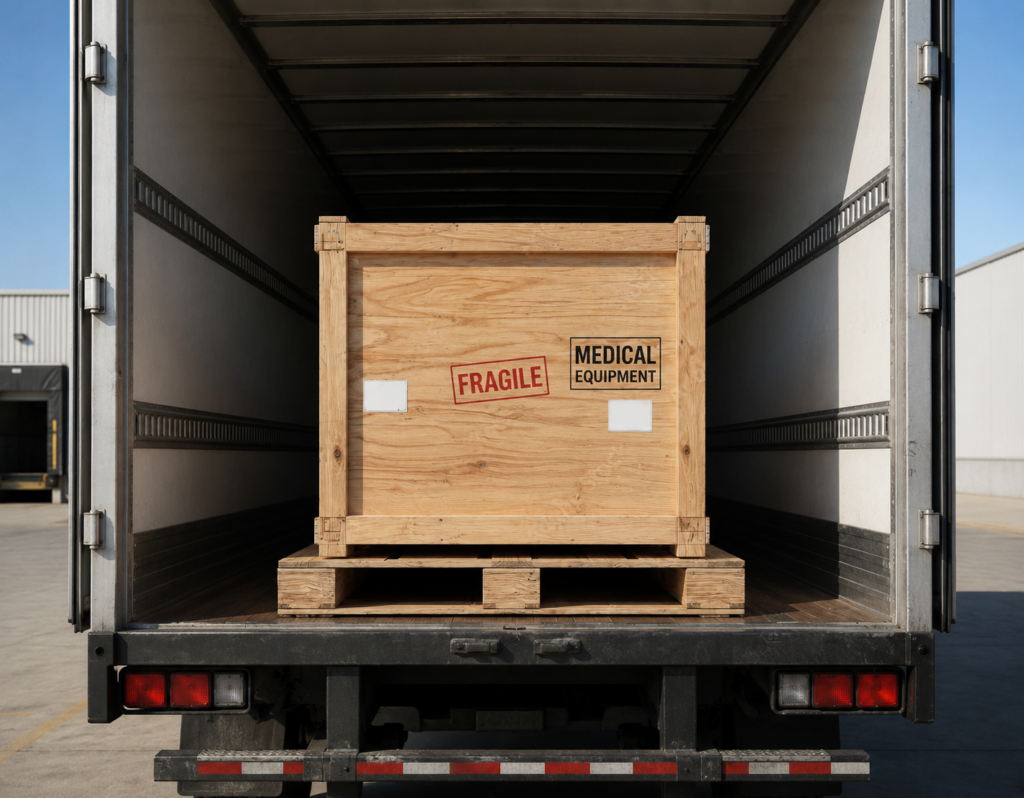
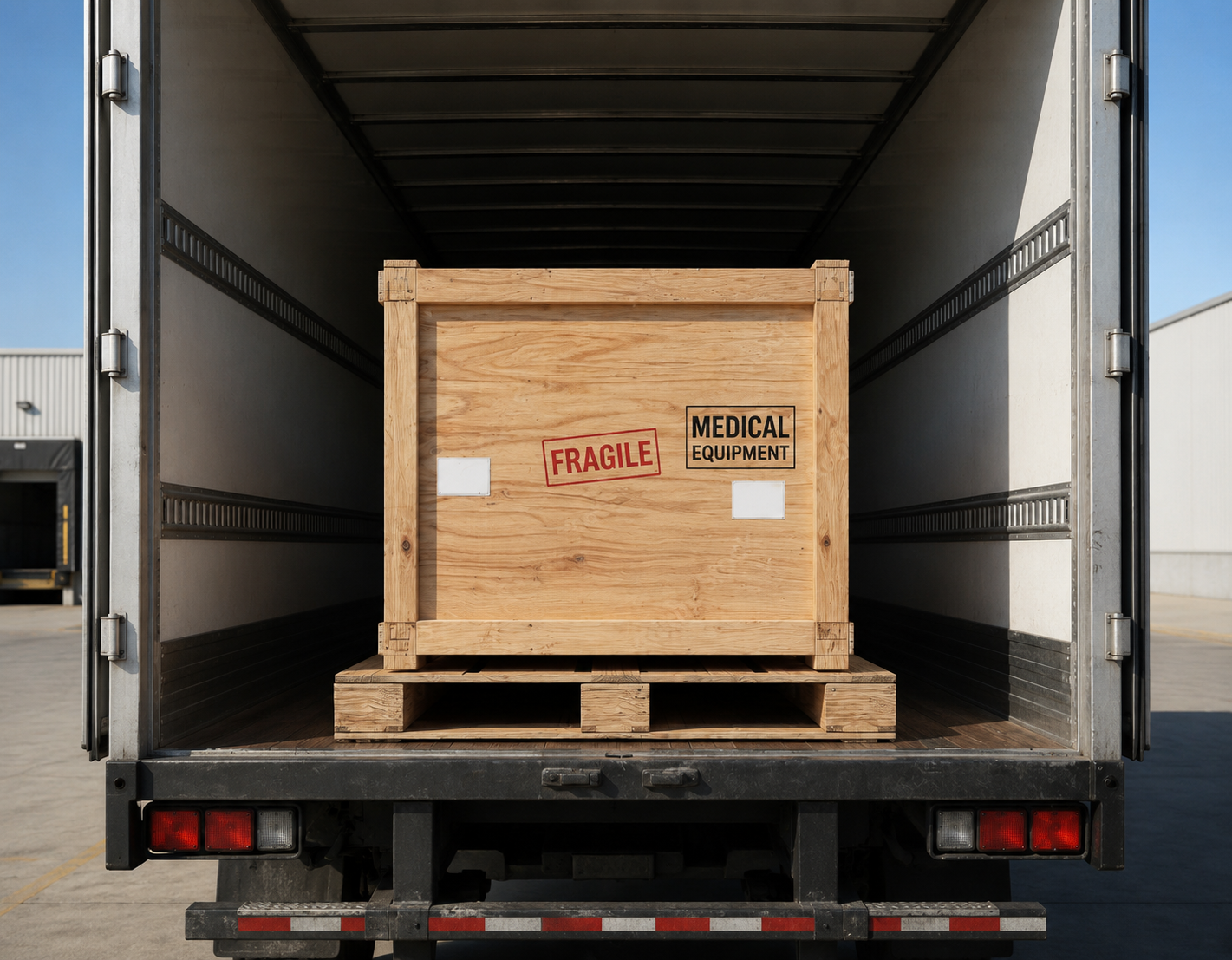
For complex medical devices, the crate or container is part of the product. EFW works directly with manufacturers and their engineers to:
- Select high‑quality materials and bracing to prevent internal movement.
- Design custom foam, blocking, and shock-absorbing systems around each device.
- Test how packaging performs under vibration, tilt, and impact scenarios likely to occur across transport modes.
This engineering‑led approach reduces the chance of damage in transit and the downstream cost of replacements, field repairs, and delayed go‑lives for hospitals.
For particularly sensitive equipment, EFW recommends monitoring technology such as TiltWatch and shock or temperature indicators. These devices provide a clear record that indicates if a crate has been tipped, dropped, or exposed to conditions outside the equipment’s safe operating range. This data supports warranty decisions, root cause analysis, and continuous improvement in packaging design.
Packaging is your first line of defense. Investing in engineered protection upfront is cheaper than replacing a damaged device and rescheduling an entire installation.
Reducing Touchpoints and Risk in International Transit
- Choose routings that minimize transloads and handoffs.
- Use carriers and terminals with proven handling standards for high‑value, fragile freight.
- Coordinate origin loading so devices move directly from manufacturing to secure linehaul transport with minimal intermediate storage.
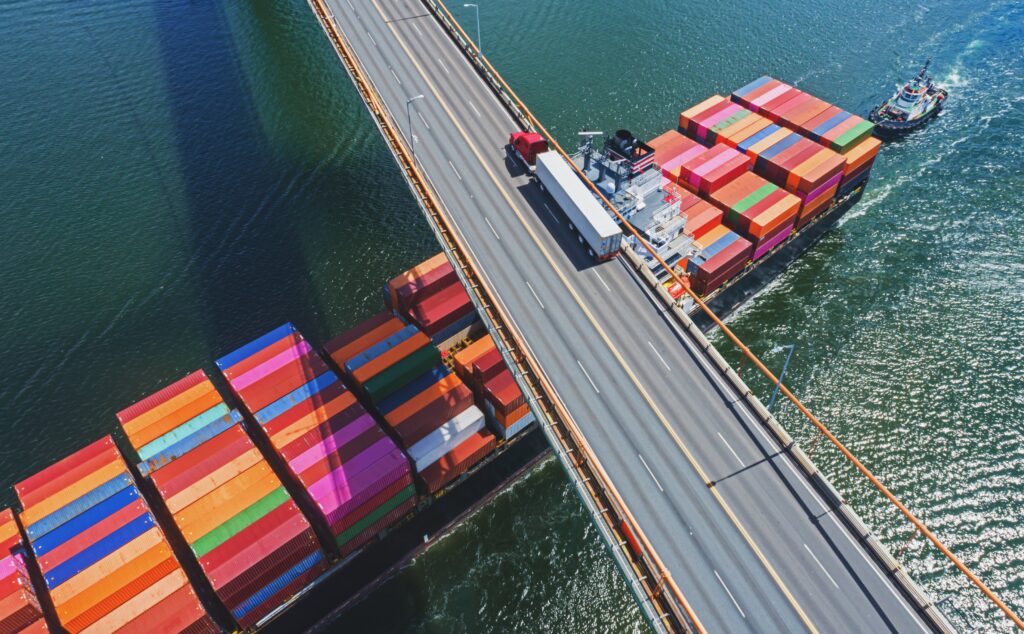
When devices move from overseas, transloading becomes a key risk area. Specialized teams should transfer these crates from ocean to air or truck. EFW positions trained personnel and trusted partners who supervise handling, verify packaging integrity, and confirm that monitoring indicators remain intact.
Where possible, shipments are routed onto commercial aircraft. Fewer legs and touches mean lower risk and more predictable delivery schedules.
Your shipping plan should be built around minimizing touches and controlling who handles your freight, not just finding the fastest or cheapest route.
Managing the Last Mile Like a Deployment, Not a Delivery
This is where the stakes are highest, and the margin for error is smallest. At the destination airport, EFW coordinates specialized white-glove teams who:
- Receive and inspect the shipment, looking for any signs of shock, tilt, or packaging compromise.
- Use appropriate equipment (liftgates, air‑ride trucks, pallet jacks, dollies) for the specific crate dimensions and weight.
- Navigate hospital or lab environments where access may be tight and sensitive areas must be protected.
These teams move the device into its final room, uncrate it, position it according to the site plan, and assist with basic setup in coordination with the manufacturer’s installation technicians.
This level of control provides real business value:
- Hospitals avoid disruption to patient care areas.
- Installation teams arrive to find equipment where and how they expect it to be.
- Manufacturers reduce “no‑go” installs due to damage discovered too late.
Final-mile execution should be planned as carefully as the international leg, with teams trained specifically on medical environments and device handling.
Compliance, Documentation, and Visibility at Every Step
Manufacturers face a web of regulatory and documentation requirements. Missteps can lead to customs delays, storage fees, or even denied entry.
EFW helps manufacturers manage:
- Correct documentation for classification, valuation, and import requirements.
- Temperature, humidity, or shock records were required by quality systems or regulators.
- Chain‑of‑custody documentation for high‑value or regulated devices.
With around‑the‑clock tracking and proactive communication, EFW provides real-time visibility, keeping manufacturers and hospitals informed about shipment status, potential delays, and revised ETAs. Service teams can adjust installation schedules and avoid wasted time on site.
Compliance and visibility are what keep high‑value devices from getting stuck at borders or showing up unannounced at a hospital dock.
Why the Right White‑Glove Partner Matters
When you add it up — engineered packaging, controlled handling, minimized touchpoints, compliant documentation, and specialized final‑mile support — the difference between a general freight provider and a true white‑glove medical logistics partner is stark.
For manufacturers, partnering with EFW on medical device shipments means:
- Lower TCO: fewer damage claims, replacements, and emergency reships.
- Greater reliability: equipment arrives when and where it’s needed, ready for installation.
- Stronger customer relationships: hospitals experience smooth deliveries and a faster time to clinical use.
- Reduced internal burden: your teams focus on engineering and service, not chasing shipments and solving logistics crises.
EFW collaborates with manufacturers to design and operate tailored shipping solutions for sensitive medical devices, from the production line to the point of care. Our integrated approach protects your products and the patients who rely on your technology.
Click here to learn more about EFW’s health care shipping services and solutions.