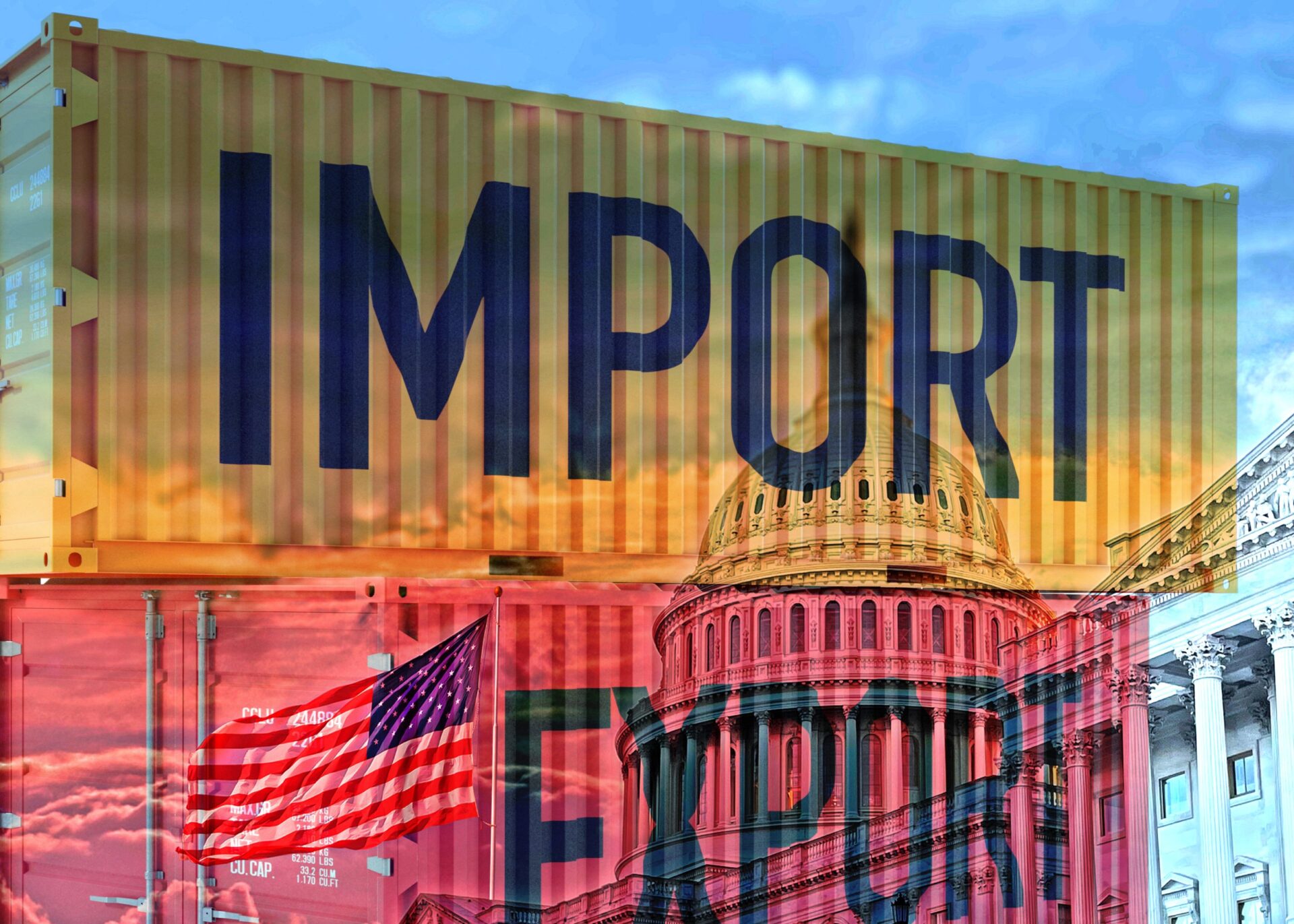
Discussions around the tariffs that are being enacted by President Trump continue to evolve, leaving a number of questions and concerns about which tariffs will be implemented and when they may go into effect. While tariffs on Chinese imports have been in place since President Trump’s first term, the most recent tariffs that went into effect on February 4 place an additional 10% fee on all imports from China, bringing the average tariff rate to 33%.
Canada and Mexico have also recently been added to the list of countries being impacted by tariffs. Under the International Emergency Economic Powers Act (IEEPA), these tariffs are being implemented in response to the national security threat of uncontrolled drug trafficking at the United States’ northern and southern borders. According to the White House, 97% of fentanyl seizures take place at the southern border.
With the new tariffs on goods from Mexico and Canada, all items will be subject to a 25% duty.
However, as of this writing, President Trump signed an order on March 6 issuing temporary exemptions on goods that are deemed compliant under the United States-Mexico-Canada Agreement (USMCA). As a result, approximately 50% of goods from Mexico and 60% of goods from Canada are still subject to the 25% tariff. The exemptions on their remaining imports will remain in place until April 2, which is also the date that President Trump plans to enact reciprocal tariffs on nations that have placed import taxes on goods from the U.S.
The full extent of these tariffs and their economic consequences are still unfolding but will most certainly affect the price of goods, production costs, and trade flows across borders. In this article, we’ll dive into the latest statistics on President Trump’s tariffs and explore what they mean for the supply chain.
1. The Scope of Tariffs on China
President Trump’s tariffs on China, which began in 2018, were among the most widely discussed aspects of his trade policy. The U.S. imposed tariffs on a staggering $370 billion worth of Chinese goods by 2020, targeting sectors such as electronics, machinery, textiles, and consumer goods. These tariffs were designed to reduce the U.S. trade deficit with China and to encourage Chinese companies to stop intellectual property theft and unfair trade practices. However, the tariffs have not only increased costs for U.S. consumers, but have also disrupted global supply chains and will continue to do so as the new tariffs take effect.
With the addition of the 2025 tariffs:
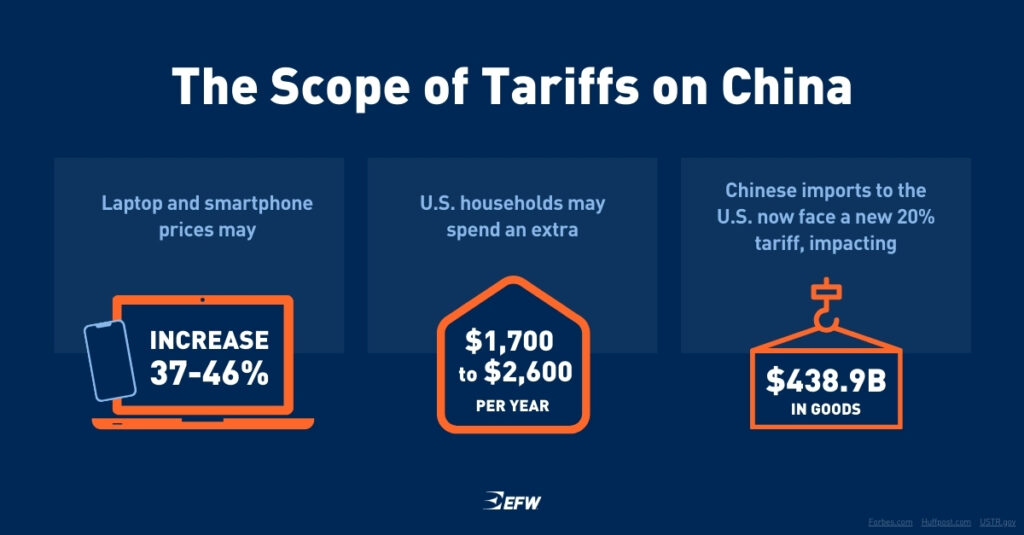
- The average price of electronics, such as laptops and smartphones, could increase in price by as much as 46% and 37%, respectively.
- The average U.S. household will likely spend $1,700 to $2,600 more per year as a result of increased prices due to tariffs.
- The total value of Chinese goods imported into the U.S. in 2024 was $438.9 billion. While these goods will be subject to the new 20% tariffs as of this year, these fees are in addition to those that already existed on $370 billion in Chinese imports.
The tariffs already in effect have prompted companies to reassess their supply chains by seeking new suppliers outside of China, and with the new tariffs (and retaliatory tariffs recently enacted by China on U.S. imports), companies can expect more of the same.
2. Impact of Tariffs on Mexico: A Critical Trade Partner
Mexico has long been a key trade partner of the U.S., particularly in sectors like automotive, agriculture, and electronics. While the 25% tariff on imports from Mexico into the U.S. was enacted on March 4, Trump announced two days later that the tariffs will not apply to goods that are compliant with the USMCA, which include automobiles, auto parts, agricultural products, furniture, appliances, and more.
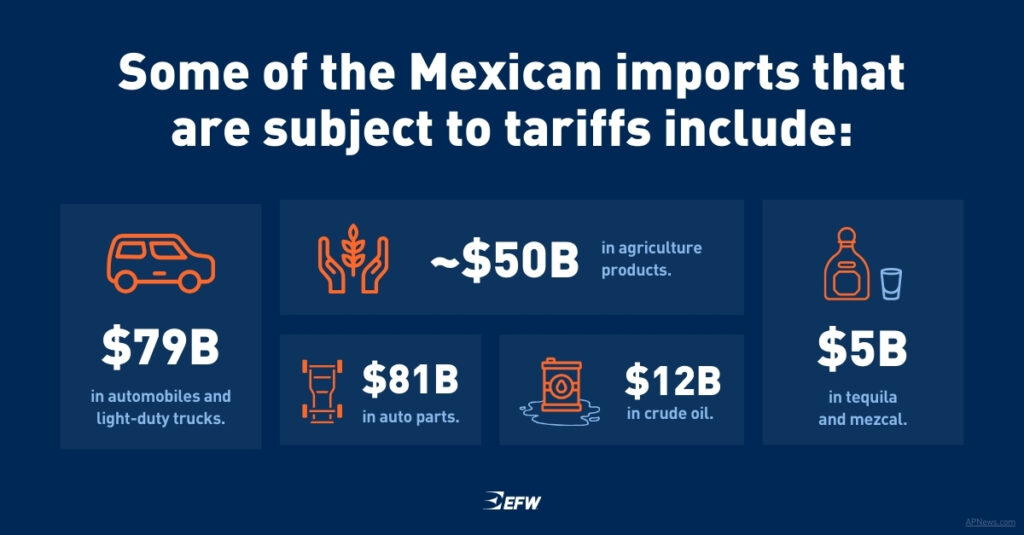
As the U.S. and Mexico continue working together to secure the border and prevent illegal drug trafficking, it remains to be seen whether the tariffs will resume on April 2, as scheduled. If they do, they could impact as much as:
- $79 billion in automobiles and light-duty trucks.
- $81 billion in auto parts.
- $12 billion in crude oil.
- Nearly $5 billion in tequila and mezcal.
- Approximately $50 billion in agriculture products.
Consumers will also likely see an average price increase of $3,000 for new vehicles.
3. Canada’s Response: Adjusting to the Tariffs
Like Mexico, Canada has a temporary reprieve from the tariffs imposed on March 4, which are set to resume on April 2. They would be especially detrimental to industries reliant on integrated supply networks, such as the automotive and manufacturing sectors. Canada and the U.S. share many of the same supply chains, and the imposition of tariffs would likely result in higher costs for businesses on both sides of the border — particularly in light of the 25% retaliatory tariffs imposed by Canada.
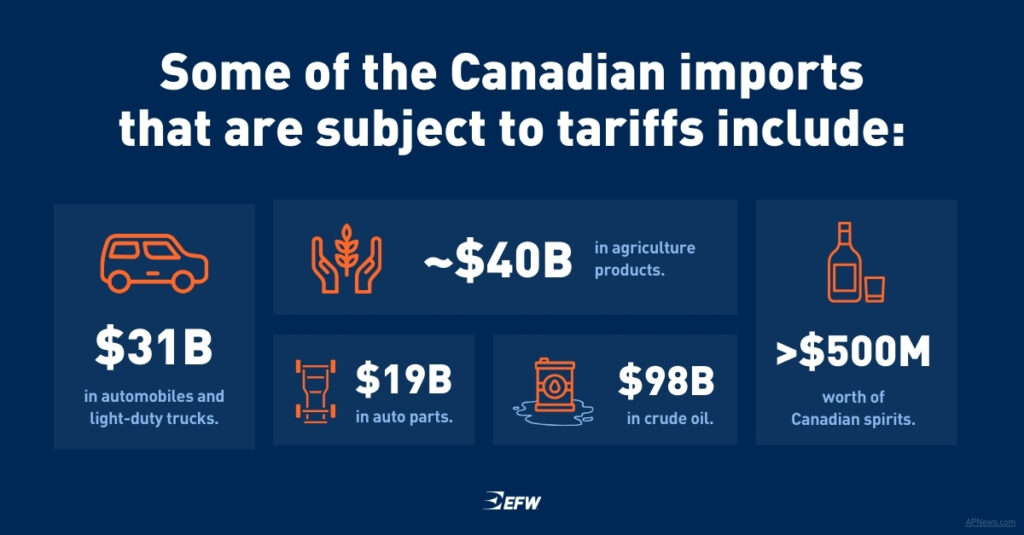
Some of the Canadian imports that are subject to tariffs include:
- $31 billion in automobiles and light-duty trucks.
- $19 billion in auto parts.
- $98 billion in crude oil.
- More than a half-billion dollars worth of Canadian spirits.
- Over $40 billion in agriculture products.
Canadian energy products would be subject to 10% duties as well.
4. Tariffs and the U.S. Supply Chain: A Rising Cost for Businesses
The tariffs previously imposed on China, Mexico, and Canada have had significant repercussions for U.S. businesses, particularly manufacturers. Consumers have also felt the impact from previously enacted tariffs as the cost of goods rose as a result of the tariffs being passed on to consumers.
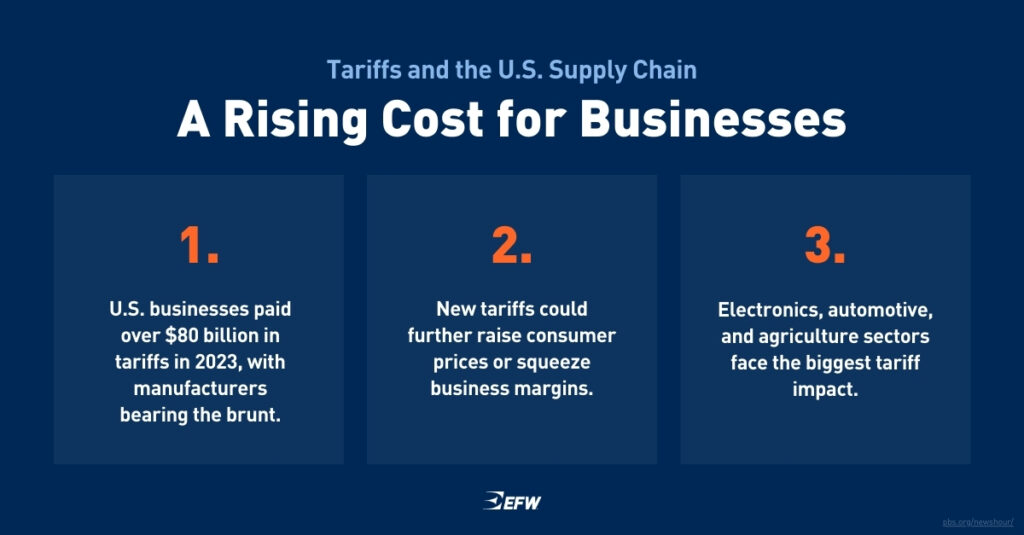
According to a 2025 study by the National Bureau of Economic Research, U.S. businesses paid over $80 billion in tariffs in 2023 alone, with manufacturers shouldering the largest portion of these costs. The latest tariffs will likely exacerbate the effects on consumers and companies alike, as increased production costs will force businesses to either raise prices for consumers or absorb the costs and reduce their margins. Sectors that rely heavily on imported goods — such as electronics, automotive, and agriculture — will be particularly hard hit.
5. Global Trade and Shifting Supply Chains
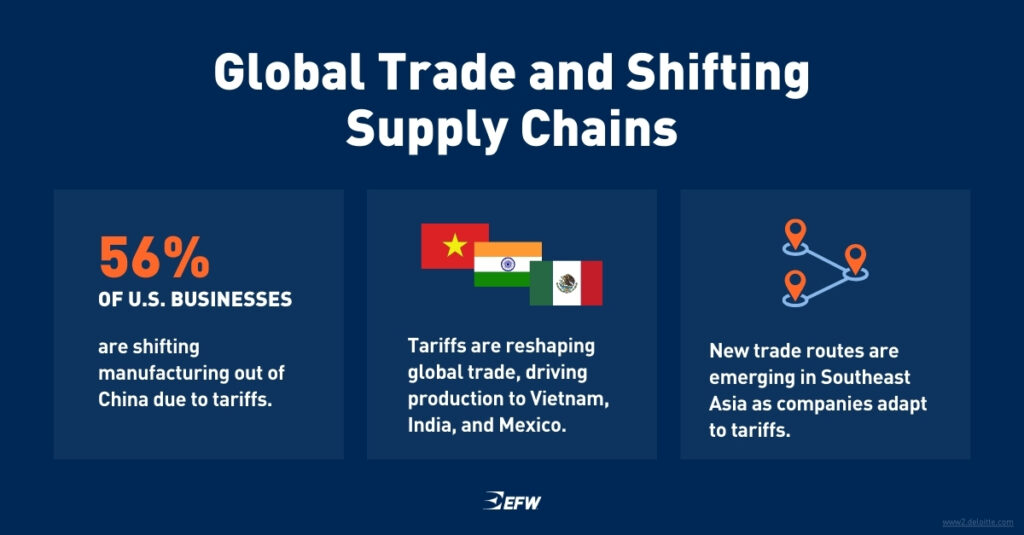
President Trump’s tariffs will inevitably have a broader impact on global trade, as was the case with the tariffs enforced during his first term. As companies sought to avoid U.S. tariffs on Chinese goods, they began to shift production to countries like Vietnam, India, and Mexico. According to a report by Deloitte in 2025, 56% of U.S. businesses have either moved or are planning to move a portion of their manufacturing operations out of China due to the ongoing tariffs. This has led to significant changes in the global supply chain, with new trade routes emerging, especially in Southeast Asia.
Stay Ahead of Changes to Prepare for What’s Next
As companies work to navigate the changes that will result from the latest round of tariffs, a look at historical trends, such as the impacts that were felt during President Trump’s first term (e.g., higher production costs, shifts in global trade routes, and significant changes in the way businesses source materials and manufacture goods), can help them better understand what to expect. However, as additional companies impose their own retaliatory measures, it will be critical to remain abreast of the changes in order to best prepare for what lies ahead.
For companies navigating this new landscape, understanding the full scope of these tariffs — and the economic implications surrounding them — is crucial to successfully adapting their supply chain strategies.
Click here to learn more about EFW’s international shipping solutions and how they can help your team stay informed about the potential impacts of tariffs on your shipping operations.
Sources: Time.com, WhiteHouse.gov, CNBC.com, Forbes.com, Huffpost.com, USTR.gov, APNews.com, Reuters.com, Deloitte.com